
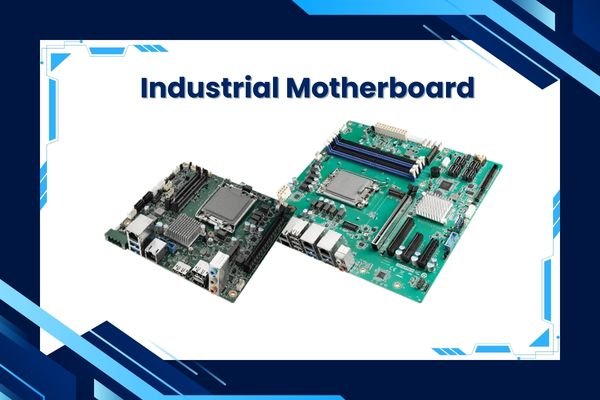
Selecting the right industrial motherboard is one of the most important technical decisions in any automation project. Whether you are building machine control panels, SCADA systems, CNC controllers, or inspection stations, the motherboard defines system stability, uptime, and long term reliability.
Unlike consumer hardware, an industrial motherboard is built for 24×7 operation, harsh environments, and extended product availability. For automation engineers, factory owners, system integrators, and procurement managers in India, choosing the correct platform directly affects production continuity and maintenance cost.
This guide explains how to evaluate, compare, and select the ideal industrial PC motherboard for your automation control systems.
Why an Industrial Motherboard Is Essential for Automation
Industrial environments are demanding. High ambient temperatures, electrical noise, dust, vibration, and voltage fluctuations are common in Indian manufacturing facilities.
A standard desktop board may work in an office environment, but it is not designed for:
- Continuous operation without shutdown
- Legacy serial communication devices
- Extended temperature exposure
- Long lifecycle manufacturing
A rugged industrial motherboard is engineered using industrial grade components, validated for endurance, and built for predictable performance under stress. For factory automation hardware, reliability is not optional. It is directly linked to production targets and operational efficiency.
Industrial Motherboard vs Regular Motherboard
Understanding the difference between an industrial motherboard vs regular motherboard helps decision makers avoid costly mistakes.
| Feature | Industrial Motherboard | Regular Motherboard |
| Operating Hours | 24×7 continuous use | Intermittent usage |
| Temperature Support | Wide temperature range | Limited to room temperature |
| Lifecycle | 5 to 10 years | 12 to 18 months |
| Serial Ports | Multiple COM ports available | Limited or none |
| Components | Industrial grade components | Consumer grade components |
| Reliability | High reliability motherboard design | Standard reliability |
Industrial boards are tested for endurance and stability. Regular motherboards focus more on consumer features and faster upgrade cycles. For automation control systems, lifecycle and stability matter more than aesthetics or gaming level performance.
Operating Temperature and Environmental Conditions
Many factories in India operate in high heat conditions. Steel plants, textile units, foundries, and outdoor installations face temperature fluctuations daily.
An industrial motherboard with wide temperature range supports operation from sub zero temperatures up to 60 or 70 degrees Celsius. A motherboard with extended temperature support reduces hardware failures caused by thermal stress.
When selecting a board, verify:
- Operating temperature range
- Storage temperature rating
- Passive cooling capability
- Compatibility with fanless enclosures
A fanless industrial motherboard is often preferred in dusty environments because it reduces moving parts and maintenance frequency.
Importance of Multiple COM Ports in Automation
Serial communication remains widely used in Indian industries. PLCs, barcode scanners, CNC controllers, weighing machines, and Modbus devices often rely on RS232 or RS485.
An industrial motherboard with multiple COM ports simplifies integration without external converters or PCI expansion cards.
Instead of adding separate serial cards, selecting a board with built in COM ports:
- Reduces overall system cost
- Improves reliability
- Saves panel space
System integrators should carefully count serial device requirements before finalizing hardware.
Long Lifecycle Support for OEMs and Machine Builders
A long lifecycle motherboard is essential for equipment manufacturers. If a board gets discontinued within a year, redesign costs increase and certification processes may need repetition.
Industrial PC motherboard manufacturers typically provide:
- 5 to 10 years product availability
- Consistent chipset platform
- BIOS and firmware support
This long term availability supports spare part management and service contracts. For industries like pharmaceuticals, automotive manufacturing, and food processing, stability in hardware supply chain is extremely important.
Embedded vs Standard Industrial Platforms
An embedded industrial motherboard is compact and energy efficient. It is suitable for:
- HMI panels
- Kiosk systems
- Medical diagnostic machines
- Compact edge systems
Embedded boards usually operate at lower power consumption and can be used in fanless designs.
On the other hand, full size ATX or Micro ATX industrial boards are better for applications requiring multiple expansion cards and higher processing capability. The choice depends on application complexity, available space, and expansion needs.
Expansion, Connectivity, and Future Proofing
Automation systems often grow over time. Adding data acquisition cards, network modules, or storage devices should not require a complete redesign.
Look for an industrial motherboard that supports:
- PCIe expansion slots
- Multiple LAN ports
- USB 3.0 and USB 2.0 connectivity
- M.2 storage options
If your facility plans to implement IoT based monitoring or remote diagnostics, additional LAN ports and secure boot support become useful.Planning ahead reduces upgrade costs later.
Power Input and Protection
Voltage instability is common in industrial setups. Selecting a motherboard with proper electrical protection is important.
Choose boards that provide:
- Wide DC input range
- Overvoltage protection
- Surge protection
- EMI and ESD resistance
A high reliability motherboard includes these protective features to maintain stable operation even during electrical disturbances.
Matching the Industrial Motherboard to Your Application
Different automation applications require different configurations.
For PLC and SCADA systems, select a board with multiple COM ports, dual LAN support, and wide temperature compatibility.
For machine vision systems, focus on processing power, PCIe bandwidth, and high speed USB interfaces.
For CNC and motion control applications, consistent latency and stable power regulation are essential.
For outdoor kiosks, prioritize a motherboard with extended temperature support and a fanless configuration.
Evaluating the workload and communication requirements before purchase prevents integration issues later.
Why Choose Global Infotech Solutions
When sourcing industrial computing solutions in India, working with an experienced supplier reduces risk.
Global Infotech Solutions is a leading supplier of industrial motherboard solutions, embedded systems, and factory automation hardware across India. The company supports automation engineers and system integrators with:
- Technical consultation before purchase
- Custom configuration support
- Industrial PC motherboard options for multiple industries
- After sales technical assistance
Their expertise in automation control systems helps businesses select the correct rugged industrial motherboard based on application, environment, and budget.
Final Thoughts
Choosing the right Industrial Motherboard is not just a technical selection. It is a strategic decision that impacts uptime, production efficiency, and long term maintenance planning.
By evaluating temperature range, COM port requirements, lifecycle commitment, expansion capability, and electrical protection features, automation professionals can select hardware that supports stable operations for years.
For reliable industrial computing solutions in India, Global Infotech Solutions provides trusted industrial motherboard options designed for demanding automation environments.
Frequently Asked Questions
Q1. How is an industrial motherboard different from a regular motherboard?
Answer: An industrial motherboard is built for continuous operation, harsh environments, and long lifecycle availability. A regular motherboard is intended for short term consumer use.
Q2. Why should I choose an industrial motherboard with wide temperature range?
Answer: Wide temperature support prevents system failure in high heat factory conditions and outdoor installations.
Q3. How many COM ports do automation systems usually require?
Answer: Many systems require multiple serial connections. An industrial motherboard with multiple COM ports simplifies integration of PLCs and legacy devices.
Q4. Are fanless industrial motherboards suitable for dusty factories?
Answer: Yes. A fanless industrial motherboard reduces dust accumulation and mechanical wear, making it ideal for enclosed industrial cabinets.
Q5. What is the typical lifespan of a long lifecycle motherboard?
Answer: Most industrial motherboards offer 5 to 10 years of production availability, along with extended technical support.