
Industrial systems rarely stay the same for long. What begins as a basic control setup often grows into something much larger. Extra sensors get added, cameras become necessary, and additional control or communication cards enter the picture. Because of this steady growth, the computing platform chosen at the start plays a major role in long-term system stability.
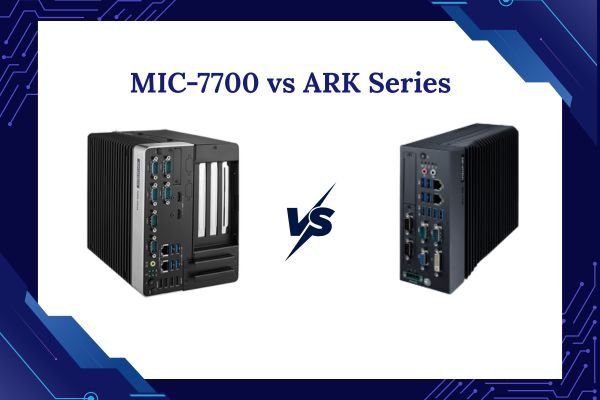
This is why the comparison between MIC-7700 vs ARK Series matters so much for industrial buyers. Both platforms come from Advantech and both serve industrial environments well, but they follow very different design paths. One is built for expansion-heavy applications, while the other focuses on compact and fixed-function usage.
This guide explains that difference in simple language, keeping real industrial usage in mind.
Why expansion-heavy applications demand careful platform selection
In many industrial environments, expansion is not an extra feature. It is a core requirement. Systems used in automation, inspection, and monitoring often need additional cards as operations scale.
Expansion-heavy setups usually involve:
- Data acquisition cards for multiple signals
- Motion control cards for multi-axis systems
- Frame grabbers for machine vision
- Communication cards for industrial networks
When a system lacks internal expansion space, users end up relying on external devices or replacing the entire unit. Both options increase cost and downtime.
Core design difference between MIC and ARK platforms
The biggest difference between MIC and ARK platforms lies in how they handle growth.
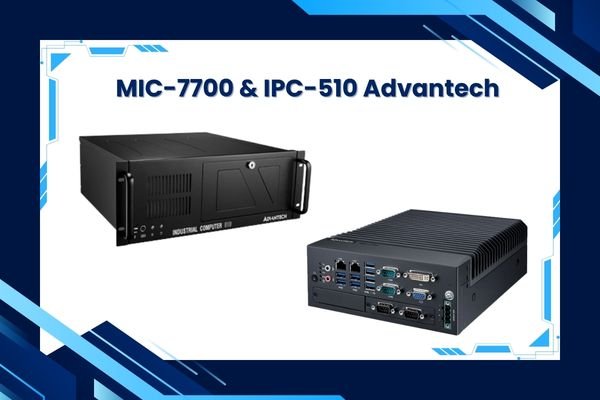
MIC systems follow a modular backplane-based structure. This allows multiple full-size expansion cards to work together inside one enclosure. ARK systems follow an embedded design approach, where most IO stays fixed and internal expansion remains limited.
Once this design gap is clear, the rest of the comparison becomes straightforward.
MIC-7700 industrial computer explained
The MIC-7700 industrial computer is designed for control cabinets and industrial racks where expansion cards define system capability. Instead of relying on fixed onboard ports, it uses expansion slots connected through an industrial backplane.
This approach allows users to:
- Add cards based on application needs
- Replace cards during maintenance
- Upgrade functionality without changing the base system
The physical build and power design of MIC-7700 also support long operating hours under continuous load.
Why MIC-7700 suits expansion-heavy environments
Expansion-heavy applications put pressure on power stability, heat handling, and signal quality. MIC-7700 addresses these needs through its modular layout and industrial-grade components.
Key advantages include:
- Support for multiple PCI and PCIe expansion cards
- Stable power delivery across all slots
- Easier servicing and card replacement
- Better suitability for mixed legacy and modern cards
This makes MIC-7700 a strong candidate for anyone searching for the best industrial PC for expansion cards.
ARK Series overview in practical terms
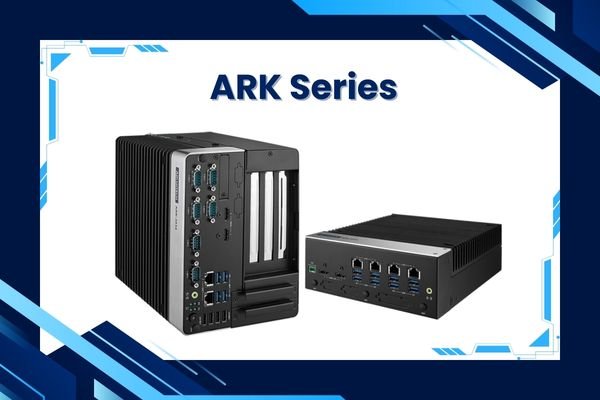
The Advantech ARK Series targets compact and embedded industrial systems. These units are usually fanless, sealed, and designed to operate in limited spaces.
ARK systems work well when:
- Installation space is limited
- IO requirements remain fixed
- Silent operation matters
- Power usage needs to stay low
However, internal expansion options remain limited, which affects long-term scalability.
Advantech ARK Series scalability in real usage
When people talk about Advantech ARK Series scalability, they usually refer to external or light internal expansion. ARK systems scale through USB devices, network IO, or small internal modules.
This method works for stable applications but becomes restrictive when full-size expansion cards are required.
MIC-7700 vs ARK Series comparison table
The table below gives a clear view of how both platforms compare for expansion-heavy use cases.
| Feature | MIC-7700 | ARK Series |
| Internal expansion slots | Multiple full-size slots | Limited internal modules |
| Expansion method | Backplane-based cards | Mostly onboard and external |
| Upgrade flexibility | High | Limited |
| Suitability for expansion-heavy systems | Very good | Moderate |
| Typical installation | Control cabinets and racks | Wall or panel mounting |
This comparison alone answers many buyer questions.
MIC-7700 vs ARK-3534 for industrial applications
The MIC-7700 vs ARK-3534 discussion often comes up during system planning. ARK-3534 suits compact edge processing tasks where size matters more than internal growth. It performs well in stable environments with predictable workloads. MIC-7700 fits applications where expansion cards define system function. Vision systems, data capture setups, and complex automation lines benefit more from MIC architecture.
MIC-7700 vs ARK-2251 in automation setups
The MIC-7700 vs ARK-2251 comparison highlights a similar difference. ARK-2251 works well as a compact controller for fixed automation tasks. MIC-7700 suits automation systems that evolve and require additional cards over time.
Choosing based on future needs often prevents early system replacement.
Fanless industrial PC with modular IO considerations
Many buyers search for a fanless industrial PC with modular IO and expect a single platform to satisfy both needs fully. ARK systems provide fanless operation but limited modular IO. MIC systems provide modular IO through expansion cards, with airflow managed based on configuration.
For expansion-heavy environments, modular IO usually carries more importance than fanless design.
Best Advantech industrial PC for expansion-focused use
When evaluating the best Advantech industrial PC for expansion, buyers should focus on long-term usability rather than initial deployment alone.
MIC-7700 allows:
- Gradual system growth
- Card reuse across projects
- Longer system life
ARK systems remain suitable when expansion remains minimal and fixed
Installation and maintenance view
MIC-7700 integrates easily into industrial racks and cabinets. Maintenance teams can access and replace cards without removing the entire system. ARK systems suit installations where space is limited and access remains restricted.
Long-term system value
Industrial systems often remain in operation for many years. MIC platforms usually deliver longer usability due to upgrade-friendly design. ARK systems may need replacement once expansion limits are reached.
Getting the platform choice right from the start
Choosing the wrong platform often leads to redesign, extra cost, and downtime. Clear understanding of expansion needs avoids these issues. This is where solution providers like Global Infotech Solutions support buyers by mapping application needs to the right industrial computing platform rather than focusing only on specifications.
Frequently Asked Questions
Q1. Is MIC-7700 suitable for machine vision systems?
Answer: Yes. MIC-7700 supports frame grabber cards and continuous image processing workloads.
Q2. Can ARK Series handle expansion cards?
Answer: ARK systems support limited internal modules but do not suit multiple full-size expansion cards.
Q3. Which platform offers better upgrade scope?
Answer: MIC-7700 offers better upgrade scope due to its modular slot-based structure.
Q4. Does MIC-7700 support legacy cards?
Answer: Yes. MIC-7700 supports PCI and PCIe cards based on backplane selection.
Q5. Which is the best industrial PC for expansion cards?
Answer: For expansion-heavy applications, MIC-7700 remains one of the strongest options.