

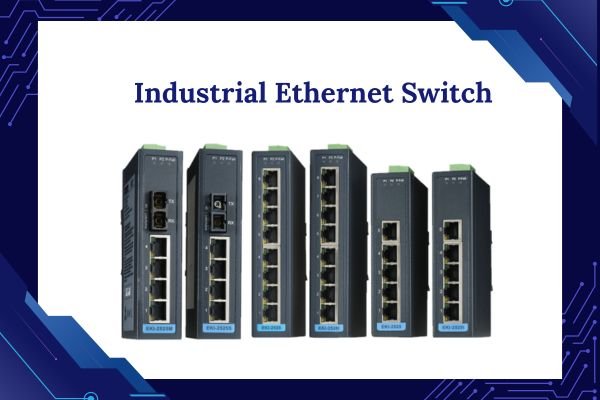
In today’s connected world, Ethernet switching is no longer limited to office networks. From smart factories and power substations to oil & gas pipelines and transportation systems, industrial networks demand far more reliability, resilience, and longevity than typical IT environments.
This is where the comparison between an Industrial Ethernet Switch and a commercial switch becomes critical.
As an industrial networking specialist with over a decade of hands-on experience in automation, plant networking, and mission-critical infrastructure, I’ve seen firsthand how the wrong switch choice can lead to downtime, data loss, and costly maintenance. This guide breaks down the real-world differences, use cases, and ROI considerations to help decision-makers choose the right solution.
What Is an Industrial Ethernet Switch?
An Industrial Ethernet Switch is a network switch specifically engineered for harsh, mission-critical industrial environments. Unlike office-grade devices, these switches are built to operate continuously under extreme conditions without failure.
Key Characteristics of an Industrial Ethernet Switch
- Wide operating temperature range (typically –40°C to +75°C)
- Rugged metal housing with high resistance to shock and vibration
- DIN-rail or panel mounting for control cabinets
- Redundant power inputs (dual DC power)
- Support for industrial redundancy protocols like:
- RSTP / MRP
- ERPS
- PRP / HSR (for substation networks)
- RSTP / MRP
- Enhanced EMI/EMC protection
- Compliance with industrial certifications (IEC 61850, EN 50155, UL, CE)
Industrial Ethernet switches are designed for 24/7 operation, often with a lifespan exceeding 10 years in the field.
What Is a Commercial Ethernet Switch?
If you’re asking what is a commercial ethernet switch, the answer is simple: it’s a switch designed primarily for enterprise, office, or data center environments.
Typical Features of Commercial Switches
- Operating temperature: 0°C to 40°C
- Plastic or lightweight metal enclosures
- Single power supply
- Rack or desktop mounting
- Optimized for controlled environments
- Lower upfront cost
Commercial switches work well in IT networks, but they are not built for industrial stress conditions.
Industrial Ethernet Switch vs Commercial Switch: Core Differences
1. Environmental Tolerance
Industrial environments expose equipment to:
- Dust and moisture
- Electrical noise (EMI)
- Vibration from heavy machinery
- Extreme heat or cold
An Industrial Ethernet Switch is purpose-built to withstand these challenges, whereas commercial switches often fail prematurely in such conditions.
2. Network Reliability & Redundancy
Reliability is the most critical factor in industrial automation.
Industrial switches support:
- Fast ring recovery (<20 ms)
- Network self-healing
- Redundant power and links
Commercial switches rely on basic IT protocols and lack deterministic behavior required for real-time automation.
3. Lifespan & ROI
While industrial switches cost more initially, they offer:
- Longer operational life
- Lower maintenance
- Reduced downtime costs
In contrast, frequent replacement of commercial switches increases total cost of ownership (TCO).
Comparison Table: Industrial Ethernet Switch vs Commercial Switch
| Feature | Industrial Ethernet Switch | Commercial Ethernet Switch |
| Operating Temperature | –40°C to +75°C | 0°C to +40°C |
| Housing | Rugged metal | Plastic / light metal |
| Mounting | DIN-rail / Panel | Rack / Desktop |
| Power Input | Dual redundant DC | Single AC |
| EMI / EMC Protection | High (industrial-grade) | Limited |
| Redundancy Protocols | RSTP, MRP, ERPS, PRP/HSR | Basic STP |
| Certifications | IEC, EN, UL, CE | Enterprise IT standards |
| Typical Lifespan | 10–15 years | 3–5 years |
| Use Environment | Factories, substations, transport | Offices, IT rooms |
Use Cases: When to Use Each Switch Type
Industrial Ethernet Switch – Ideal Use Cases
- Manufacturing plants & smart factories
- Power generation and substations
- Oil & gas facilities
- Water & wastewater treatment plants
- Railways and transportation systems
- Outdoor cabinets and remote sites
If downtime equals production loss or safety risk, industrial-grade switching is mandatory.
Commercial Ethernet Switch – Suitable Use Cases
- Office LANs
- Corporate IT networks
- Data centers with climate control
- Non-critical monitoring systems
Commercial switches are cost-effective when environmental and uptime demands are low.
Industrial Networking Challenges Solved by Industrial Ethernet Switches
Industrial environments present unique challenges that office IT networks never encounter:
- Electrical noise from motors and VFDs
- Harsh climate conditions
- Unplanned power fluctuations
- Long cable runs
- Real-time data requirements
An Industrial Ethernet Switch ensures:
- Stable communication for PLCs, SCADA, and HMIs
- Deterministic traffic for automation protocols (PROFINET, EtherNet/IP, Modbus TCP)
- Secure and scalable industrial network architecture
Security Considerations in Industrial Networks
Modern industrial switches also include:
- VLAN segmentation
- Access control lists (ACLs)
- Port security
- SNMP and network monitoring
This helps protect OT networks from cyber threats while maintaining operational continuity.
Why Industrial Buyers Should Avoid Using Commercial Switches in Plants
Many plant managers attempt to reduce costs by deploying commercial switches on the shop floor. Based on real-world experience, this often leads to:
- Random network failures
- Temperature-related shutdowns
- Shortened equipment life
- Increased maintenance calls
The Industrial Ethernet switch vs commercial switch differences become evident only after failures occur, often at the worst possible time.
Why Choose Global Infotech Solutions for Industrial Networking?
Global Infotech Solutions is a trusted provider of industrial networking solutions, offering:
- Proven industrial Ethernet switch brands
- Application-specific network design
- Support for automation and IT convergence
- Reliable post-sales technical support
Their expertise helps industries build robust, future-ready networks that align with Industry 4.0 goals.
Conclusion
Choosing between an Industrial Ethernet Switch and a commercial switch comes down to reliability, environment, and long-term value. Commercial switches are designed for clean, controlled IT spaces, while industrial Ethernet switches are engineered to operate reliably in harsh conditions where downtime is not an option. For factories, utilities, and infrastructure networks, industrial-grade switches provide higher network stability, longer lifespan, and better return on investment.
With proven expertise in industrial networking, Global Infotech Solutions helps organizations design reliable Ethernet infrastructures tailored for real-world industrial environments.
Frequently Asked Questions
Q1. What is an industrial ethernet switch used for?
Answer: An industrial ethernet switch is used in harsh environments to ensure reliable, continuous communication between industrial devices like PLCs, sensors, and control systems.
Q2. Can I use a commercial switch in an industrial environment?
Answer: Technically yes, but it’s not recommended. Commercial switches lack environmental protection and redundancy, leading to frequent failures in industrial settings.
Q3. Are industrial Ethernet switches more expensive?
Answer: Yes, upfront cost is higher but they deliver better ROI through longer lifespan, higher reliability, and reduced downtime.
Q4. What certifications should an industrial ethernet switch have?
Answer: Common certifications include IEC 61850, EN 50155, UL, CE, and industrial EMC standards.
Q5. How do I choose the right industrial switch?
Answer: Consider temperature range, redundancy needs, protocol support, mounting type, and future scalability. Consulting experts like Global Infotech Solutions helps ensure the right fit.